Insight
October 15, 2026
Integrate First: What Operation Jailbreak Asks of Defense Technology
.avif)





In some Army tactical operations centers, Soldiers still move information from one screen to the next by hand. Army CTO Alex Miller has described command posts with eight or nine displays, each fed by a system that cannot pass data to the ones beside it. Each system was bought to do a specific job, and few were specified to share what they know.
Operation Jailbreak is the Army's effort to fix that at the source. At the first event, more than 80 companies participated and 60 systems that previously could not communicate were connected, according to Army Acquisition Executive Brent Ingraham. The Army also launched an API Marketplace so interface documentation stays available after an individual event ends. The latest round – called Falcon Fury - went further; it put vendors through API demonstrations, interface documentation reviews, software and C2 validation, and formal evaluation.
Lyntris took part with three technologies that sit at very different points in the mission. What they have in common is that their value to the customer depends in part on how well they connect to everything else
Why the Army is taking back the interface
Systems bought under different programs, from different vendors and at different times still have to work together in the field. For decades, that burden fell on the customer. Closed interfaces make the original vendor necessary whenever a customer wants to connect, modify or extend a system, and over time the difficulty of integrating a product becomes part of the moat around it.
The Army has pushed against this for years through the Modular Open Systems Approach, or MOSA. Yet a 2025 Government Accountability Office review found implementation still uneven across the programs it examined, despite longstanding policy and statutory requirements. The Right to Integrate initiative raises the stakes by making the ability to connect an expectation of every product the Army buys. Jailbreak is where that expectation gets tested: can an engineering team outside the original developer read the interface, use the documentation and get systems exchanging data without starting another custom integration effort?
For industry, this changes the basis of competition. Companies have to earn their position through the performance of their software, with far less shelter from the cost of replacing an incumbent.
What we brought to Jailbreak
We chose three technologies that each sit at a point where integration determines what the customer can actually do with it. Putting them into a government-owned architecture, with documentation available through the Army's API Marketplace, gives programs a clearer path to integrating them without starting from scratch.
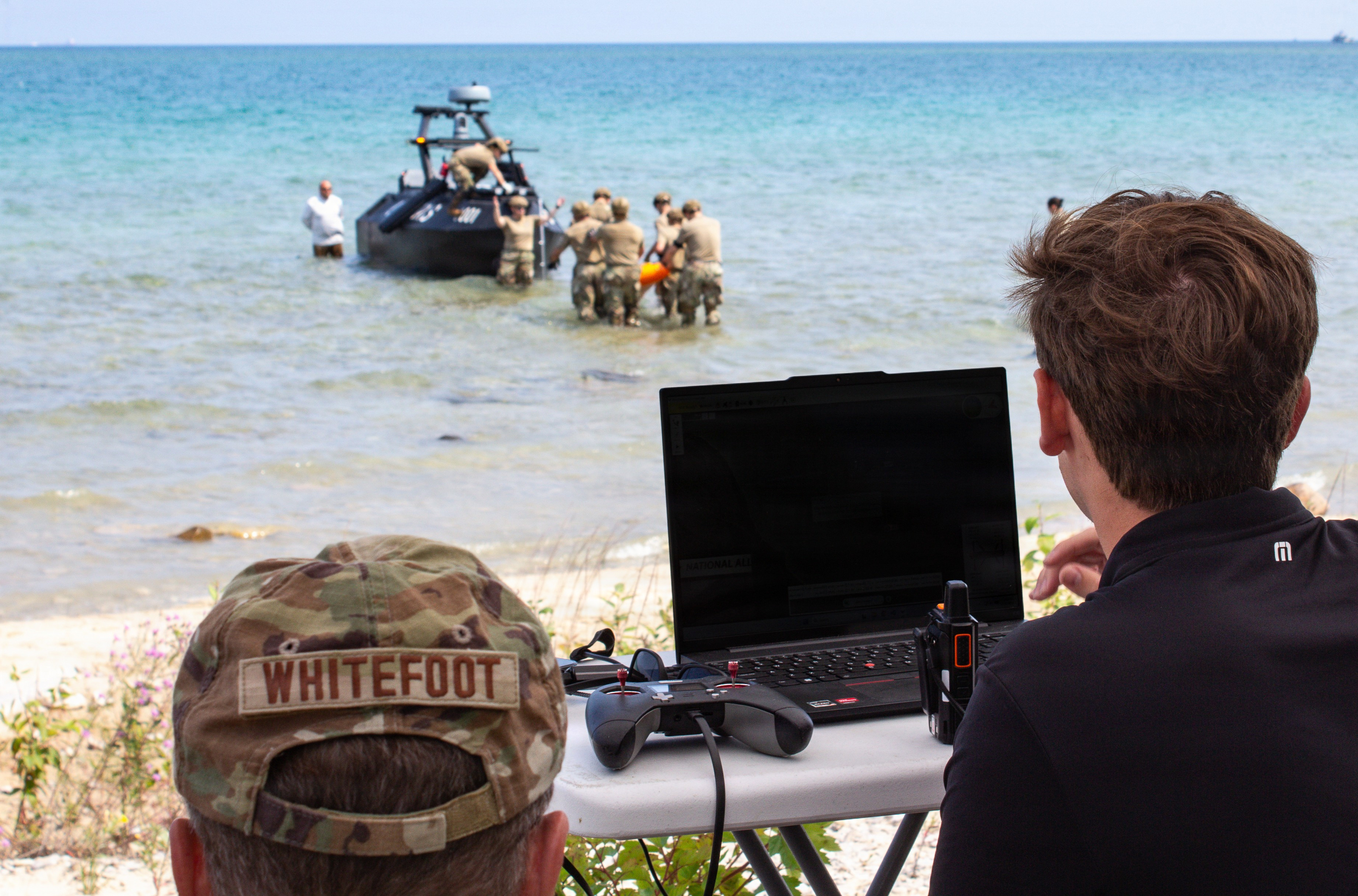
HELM - Maritime autonomy. Our embedded ownership autonomy controls propulsion, steering and vessel dynamics on unmanned surface vessels and is currently delivered to OUSW R&E under the EMC2 OTA. It has been tested across multiple USVs, including Lyntris’ MV-20, on a UMAA-compliant architecture. Vessel-level control sits beneath defined interfaces, so mission autonomy, sensors and communications payloads from other vendors can operate on top of it. For a customer, that means a vessel can be reconfigured as the mission changes, and a new payload can be added without redesigning the software that drives the boat.
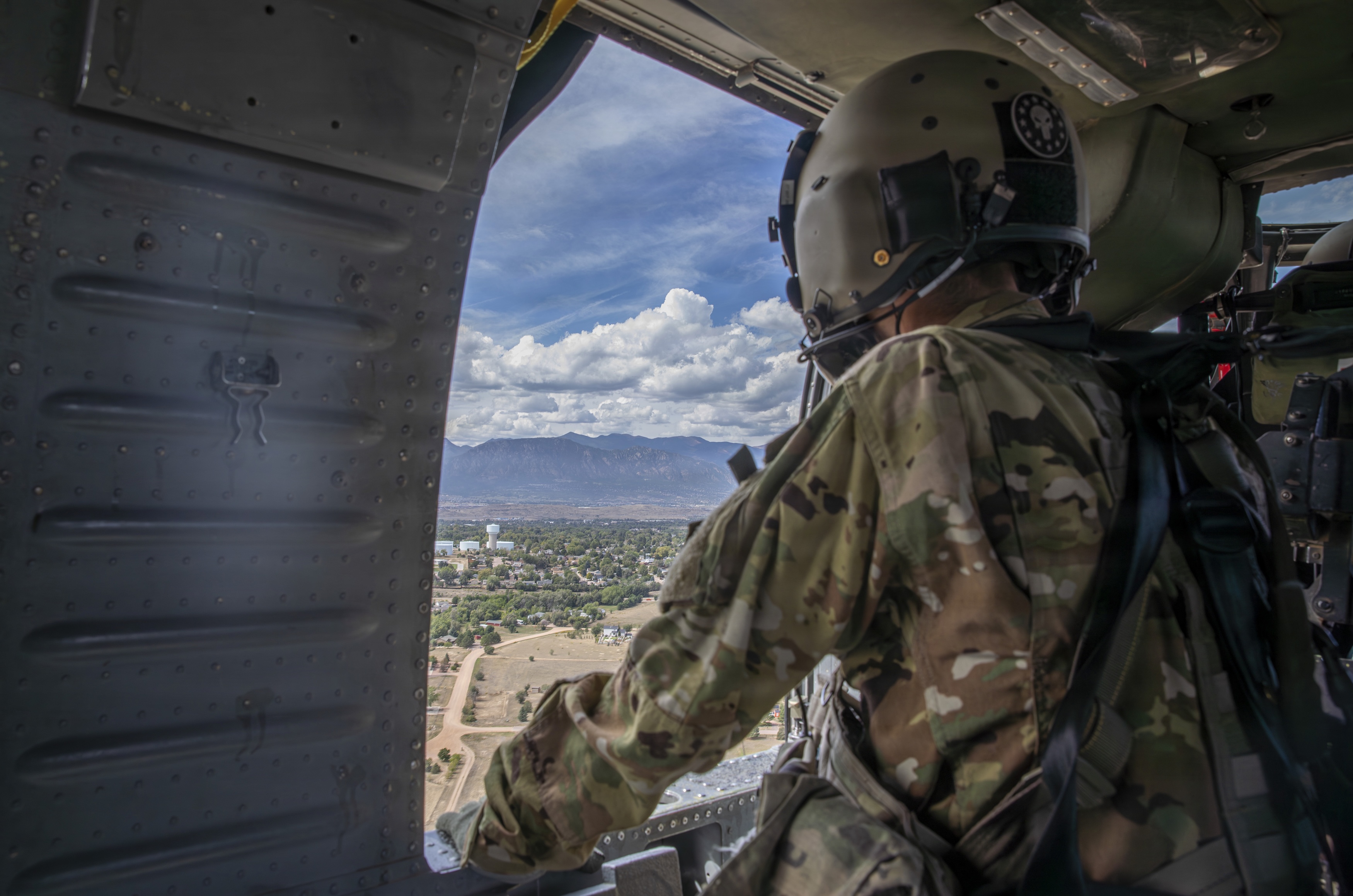
Dragonflight - Collaborative autonomy. Built on two decades of government-sponsored research and tested across thousands of live platform hours, our collaborative autonomy coordinates heterogeneous teams of uncrewed systems across air, ground and maritime environments. Under U.S. Navy sponsorship, it has performed distributed RF emitter localization, reassigned tasks in flight and sustained coordinated operations without persistent communications. As the Army and joint force field uncrewed systems from many vendors, the value comes from making those systems work as a team. That value only exists if the software can connect to platforms we didn't build, which is exactly what Jailbreak evaluates.
Tesio - Supply chain intelligence. Our supply chain intelligence software traces component and supplier risk through complex bills of material and across products and programs. It projects part health over a ten-year horizon and maps microelectronics fabrication, packaging and test sites across sub-tier suppliers. It then compares responses such as alternate sourcing, lifetime buys and redesigns. Open architectures bring components from more suppliers into every system. When this capability connects to the data programs already hold, a sustainment office can see how a single supplier disruption would affect multiple programs, and act before it becomes a readiness problem. In a contested logistics environment, the platform also allows services to look across the lines to identify common use items across weapon system programs.
Integration moves upstream
The Army is already carrying this approach beyond individual events. In July, Portfolio Acquisition Executive Fires established Reveille Forge at Redstone Arsenal as a standing integrated development environment based on lessons from Jailbreak. Its Integrate-First pathway requires companies to connect products to a government-owned architecture before further capability review and testing. Ingraham has argued that requirements should define how systems connect as deliberately as they define what those systems do.
For the government, early integration yields information no requirements document or vendor briefing can provide. It exposes dependencies, shows where custom engineering is still needed, and indicates whether a new technology can enter an existing architecture cleanly. Interoperability is one measure of readiness among several. Cyber authorization, operational testing, production, sustainment and performance under mission conditions all still apply, and Integrate-First moves the interface question to the front of that sequence.
For industry, the engineering implications are immediate. Interfaces have to be designed while the product architecture is still taking shape. Documentation has to keep pace with the code. Development teams have to plan for vendors and systems outside their control, because those connections are now part of how their capability will be judged.
The Army is writing integration into the start of the acquisition process. For programs, that means capabilities can be evaluated on what they deliver inside a real architecture, and that is the standard to which we want our products held.
To learn more about Lyntris technology or our API listing, reach out at info@lyntris.com