
Insight
September 21, 2026
What It Takes to Make Autonomous Aircraft Work as a Team
.avif)





A few years ago, the central question in military autonomy was about the platform itself: could an aircraft take off, navigate, avoid obstacles, and complete a mission without constant human control? Industry and government poured billions into answering that question, and the technology has matured enough that the Department of War is now investing heavily in autonomous systems at scale.
That success has surfaced a harder problem: coordinating dozens of autonomous aircraft as a single force. The system has to translate mission intent into collective behavior while the aircraft manage roles, spacing, and responses among themselves.
Drone coordination is a different problem than drone autonomy
Aviation has been here before; early flight was about getting one aircraft safely airborne. As aircraft grew more capable, military advantage came from operating them together — formation flying, aerial refueling, airborne early warning, networked command and control. Each of those innovations expanded what a group of aircraft could do that no single aircraft could do alone.
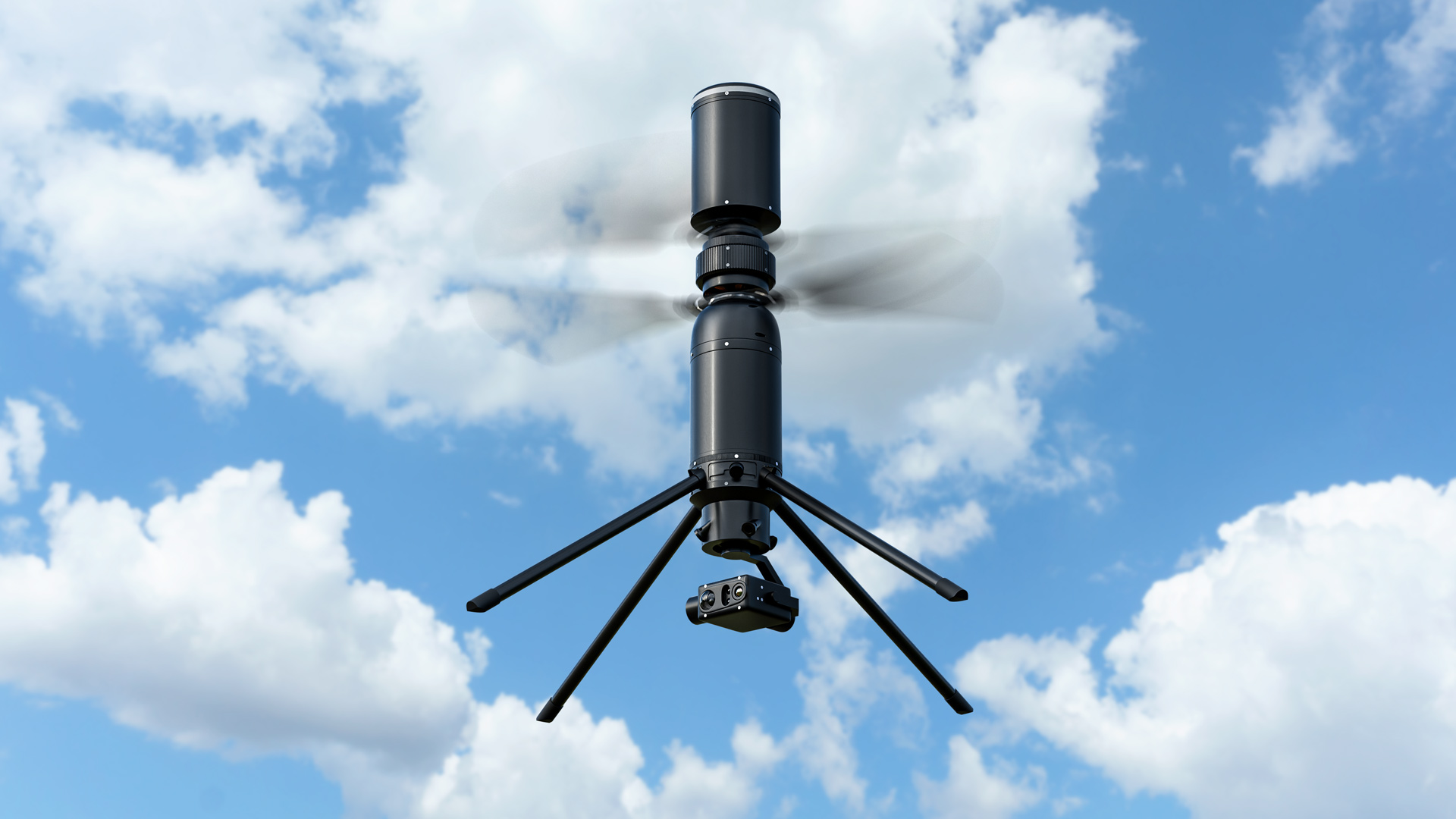
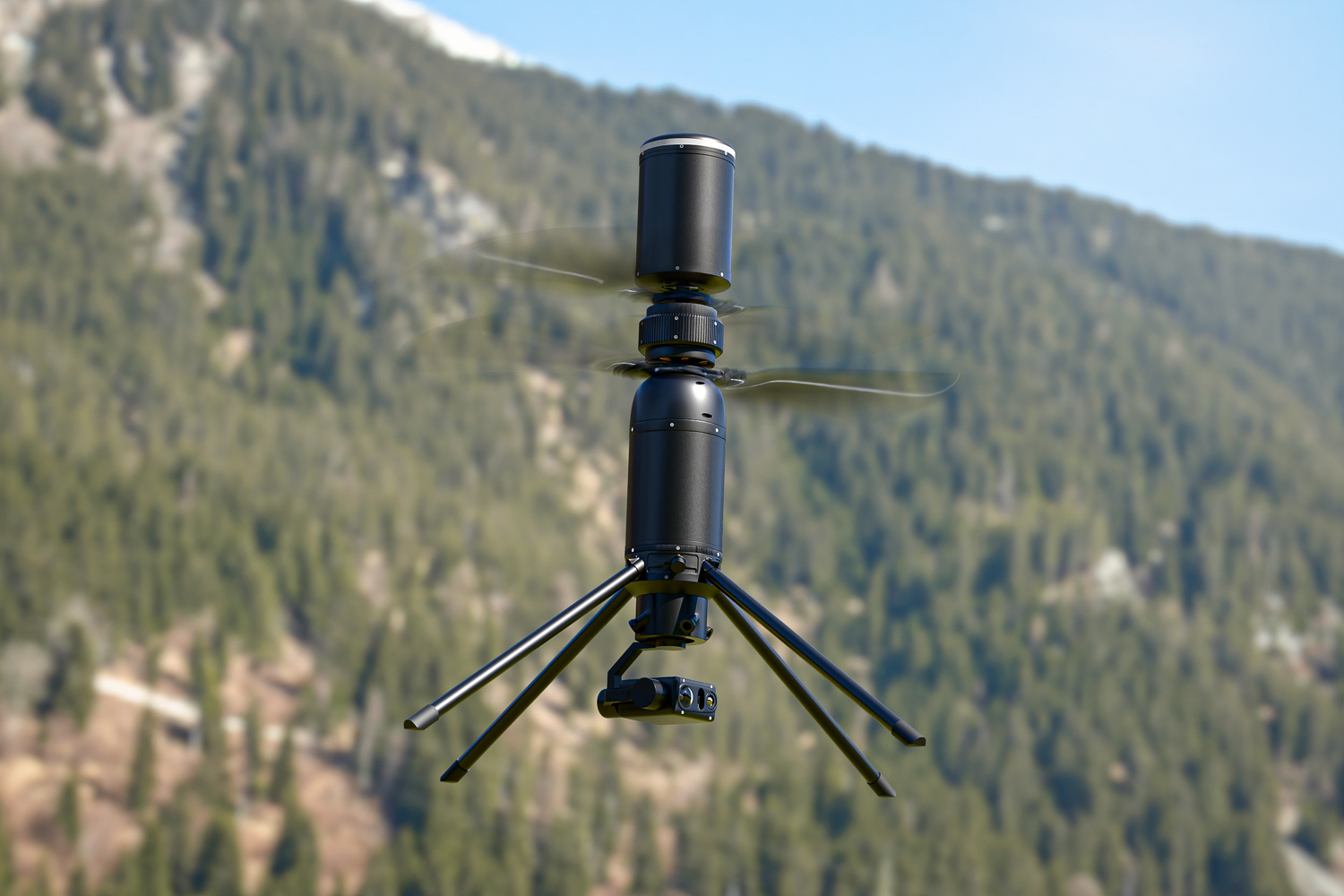
Autonomous systems are following the same trajectory, and current defense programs each illustrate a different point on that curve. Replicator focuses on fielding large numbers of affordable autonomous systems. Collaborative Combat Aircraft pairs a smaller number of highly capable autonomous aircraft with crewed fighters. Lyntris, alongside our partners at Robinson Unmanned is focused on a third piece of the puzzle: coordinating many unmanned aircraft into formations that carry out maritime and other contested missions together.
Moving from one aircraft to twenty isn't just a matter of scale — it changes the engineering problem entirely. Every additional aircraft adds relationships that have to be actively managed: spacing, timing, communications, collision avoidance, shifting mission assignments, and adaptation when an aircraft or its link is lost. Getting twenty aircraft airborne is an aviation problem. Getting them to behave like a single team is a systems problem.
Adversaries are already working on coordinated drone formations
In March 2026, Chinese state media aired a full-process demonstration of a system it calls Atlas. According to state media, a command vehicle can manage as many as 96 drones that coordinate their own movement, share information among themselves, and hold formation as one body. State broadcasters compared it to flying a hundred kites on a single string. Whatever one makes of the presentation, the capability on display — mass organized and commanded as a coherent force — is precisely the problem the field is circling.
Ukraine has demonstrated a different aspect of the problem; both sides routinely employ drones at a scale few anticipated before the war. Much of that employment still relies on mass and improvisation rather than tightly coordinated autonomous behavior, but it has shown how quickly large numbers of unmanned systems can reshape the battlefield.
Even reports that remain disputed illustrate how seriously coordinated autonomy is now taken. In June 2026, CNN reported that a downed U.S. F-15E pilot described Iranian drones maneuvering together in what he compared to a jellyfish. Intelligence officials continue to debate that account, but the discussion itself reflects growing attention to coordinated autonomous behavior.
Autonomous swarms are already on the battlefields around the globe. The competitive advantage going forward lies in turning that mass into formations that can sense, relay communications, protect high-value assets, or execute coordinated missions under real operational conditions.
A formation is a behavior, not a shape
Military formations exist to accomplish a task. One arrangement of aircraft may create a distributed sensor that observes a target from multiple angles. Another can provide an early-warning screen around a ship or convoy. A different geometry can extend communications across contested terrain, present false targets, or protect higher-value platforms.
That is the difference between mass and a maneuver element. A hundred drones with no shared intent is a crowd. Assign those same hundred to roles within a deliberate geometry, and they become distributed sensing, a defensive screen, a communications relay, a deception element, or coordinated protection for a mission-essential unit— and can adapt between those roles on command.
Getting there takes more than holding a pattern. The autonomy has to assign aircraft to roles, keep spacing as wind and lost links push them around, reshape the formation when an aircraft drops out, respect safety constraints, and sustain coordinated behavior as conditions change. Commanders establish objectives and constraints, monitor mission progress, and redirect the team when needed. The autonomy handles the detailed coordination among aircraft.
Coordination is harder than choreography
Commercial drone shows often prompt an obvious comparison. If companies can fly thousands of drones over a stadium, why is military coordination still difficult?
Because a stadium light show and a military formation only look alike from the ground. Underneath, they are different problems.
A drone show is carefully planned before takeoff. Every aircraft follows a precomputed flight path stored onboard, and the entire display plays back like an animation. The environment is tightly controlled, GPS provides precise positioning, and weather conditions are favorable. The aircraft are nearly identical, and no one is trying to interfere with them. If one drone fails, the audience sees a small gap in the display.
Military operations strip away nearly all of those assumptions. GPS may be jammed or spoofed, forcing aircraft to maintain their positions relative to one another instead of relying on satellite navigation. Communications may degrade, requiring coordination to continue without constant direction from a centralized controller. Missions change while aircraft are airborne, so formations must reorganize in real time rather than replay a scripted sequence. Individual aircraft may fail or fall behind, requiring the rest of the formation to adapt automatically. The fleet may include different aircraft types with different flight characteristics, payloads, and performance limits.
These constraints become especially demanding at sea. Aircraft teams may operate across wide areas, beyond line of sight and far from fixed infrastructure, while the ships supporting them remain in motion. Both launch and recovery locations are dynamic, and the recovery point may shift significantly while aircraft are airborne. The radio horizon, limited bandwidth and electromagnetic warfare all work against continuous connectivity. Useful autonomy must preserve mission progress through link interruptions, adapt to changing launch and recovery locations, and safely resynchronize the aircraft when connectivity returns.
Researchers have spent years advancing distributed autonomy, formation control, and collaborative robotics. Universities, government laboratories, and DARPA programs have demonstrated many of the underlying technologies. The remaining challenge is integrating those advances into operational systems that coordinate diverse aircraft in contested environments while preserving clear human authority over mission intent, safety constraints, and employment decisions.
Lyntris and Robinson are tackling autonomous teaming together
This challenge spans disciplines that rarely exist within a single company. It requires aircraft designed to maintain maximum operational availability, paired with software that allows mission commanders to plan and execute missions with autonomous capabilities from within the Navy’s existing C2 software and networks. Robinson Unmanned brings decades of experience designing dependable aircraft. Lyntris develops the mission software, autonomy and distributed coordination that enable those aircraft to operate as an autonomous team.
Together, we are developing an autonomous aircraft-teaming capability for maritime missions and other contested environments that is designed to allow multiple aircraft to establish, maintain, and adapt formations as mission conditions change.
Looking ahead
Autonomous flight is becoming a standard capability across defense programs. The next phase is learning how autonomous systems operate together as coordinated units that can adapt, recover, and accomplish complex missions under human command. Solving that problem will shape how future forces employ autonomy - not as individual aircraft acting independently, but as formations that function as a cohesive team.
Contact our team here to learn more about Lyntris’ work in autonomous aircraft teaming and discuss your mission requirements.


.png)