
Mission Omni-Band

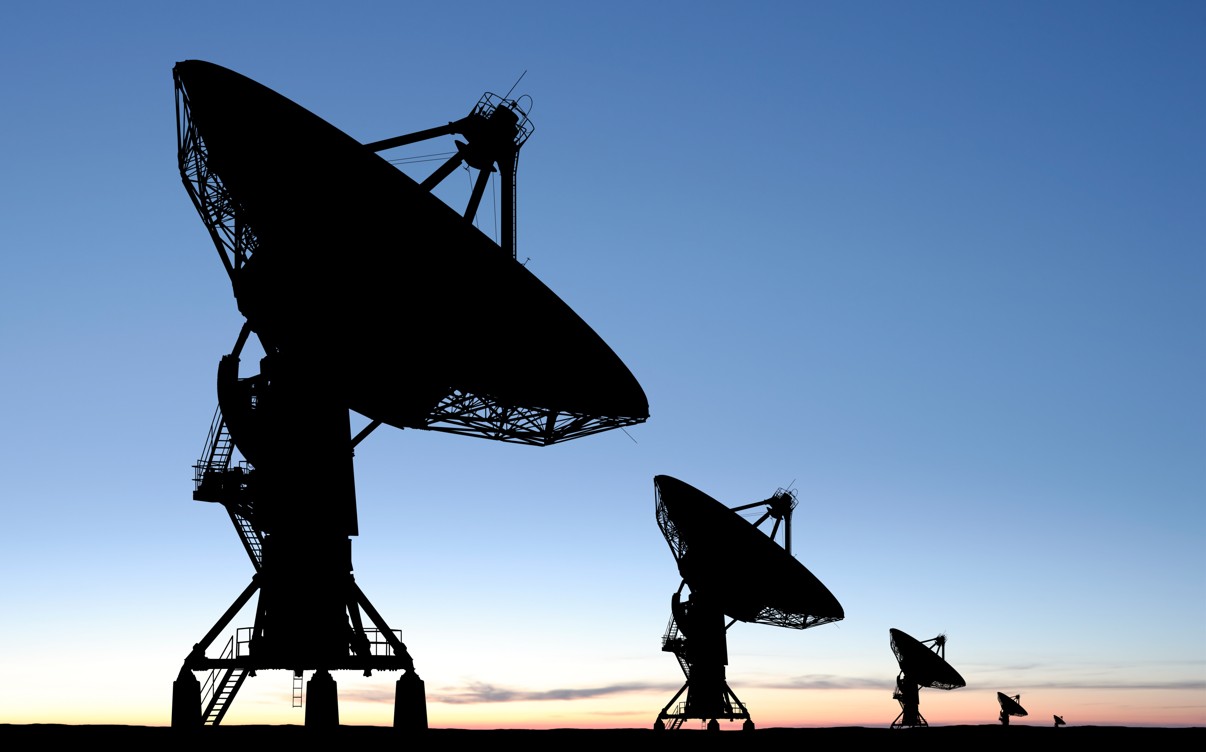
Eight bands. One mission.
The Challenge
Satellite and ground programs are typically designed and procured separately, leaving the interface between them without a clear owner. Constellations now operate across GEO, MEO, and LEO, each on its own slice of spectrum from L-band to Ka-band, while most strategic ground stations still rely on a dedicated antenna for each band. Supporting a new constellation means another aperture, another footprint, and another maintenance line. When a mission changes bands, operators hand the link from one antenna to another, and in a contested electromagnetic environment that hand-off is the weak point. Every manual reconfiguration degrades the link and creates a signature an adversary can track. Adding antennas only widens the gap. Closing it takes a different systems architecture, one that treats space and ground as a single program and gives the ground a single aperture matched to the full spectrum the satellites use.
The Reality
One aperture now does the work of many. Lyntris delivered a single multi-band feed that carries eight frequency bands, L through Ka, with a continuous 20:1 bandwidth ratio, giving operators access to every mission band without switching antennas or reconfiguring hardware. Building it took an integrated approach to RF architecture. Filters, switches, and amplifiers sit inside the feed cone instead of downstream, keeping ohmic loss low across every band. Tight machining tolerances, controlled by the same team that designed the feed, hold the phase center stable and keep monopulse tracking precise at Ku- and Ka-band. Lyntris built from more than a decade of proven feed architectures and delivered the first production unit in 12 months, working alongside a leading U.S. defense prime from design through production.
Delivered for Strategic Ground
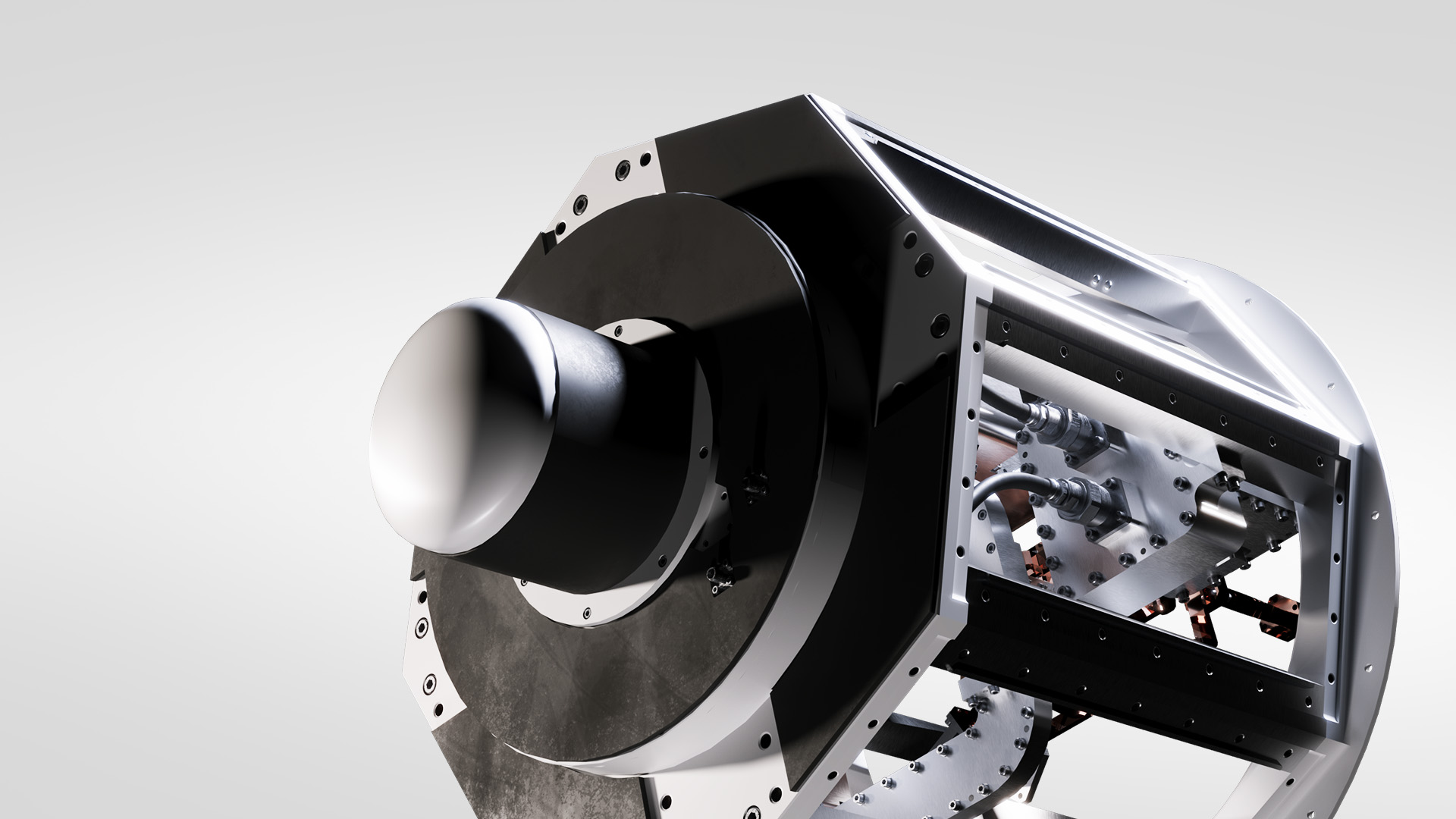
Lyntris delivered the first production unit to a leading U.S. defense prime in 2023, within 12 months of program start. One Lyntris engineering team carried the multi-band feed from RF and mechanical design through machining, assembly, and RF validation, and also designed the wiring and harnesses that tie the feed’s electronics into the larger antenna system. Keeping that work under one roof shortened the development cycle and gave the prime a single accountable partner from first design review to production hardware.