
Garda C2 for Maritime Domain Awareness


Unifying the Maritime Domain From Sensor to Commander
The Challenge
Coastal surveillance is the foundation of every maritime mission a navy runs — counter-smuggling, search and rescue, sovereignty enforcement, fisheries protection, and response to threats in territorial waters. Most coastal forces already operate radars, AIS receivers, electro-optical sensors, and coastal cameras spread across hundreds of miles of coastline. The problem is that those feeds arrive in separate windows on separate systems, and the operator is the integration layer. A single vessel of interest can appear as three different tracks across three different displays, forcing watchstanders to mentally reconcile information in real time before they can assess a situation or develop an operational response. Without a common operational picture tied to planning, commanders spend valuable time assembling information instead of creating and executing tactical plans. At the regional and national level, the picture gets thinner as data moves up the chain, and decisions are often made using information that's already out of date.
The Reality
Garda C2 became the common operational picture allied navies needed to run their maritime domain. For the Armed Forces of Morocco, Garda C2 fuses track data from multiple sensor sources into a single operational view—the first time operators have seen their maritime domain through one interface rather than several. Beyond providing a common operating picture, the platform enables operators to develop tactical plans, coordinate forces, and execute missions from the same environment. For the Egyptian Navy, the same core capability is being deployed under the Maritime Domain Awareness program, with Lyntris personnel now operating in-country to support installation, integration, and long-term partnership. The result, in both cases, is a coastal surveillance posture where operators, regional commanders, and headquarters share the same picture, plan from the same information, and act in concert.
Actively Deployed Across Allies
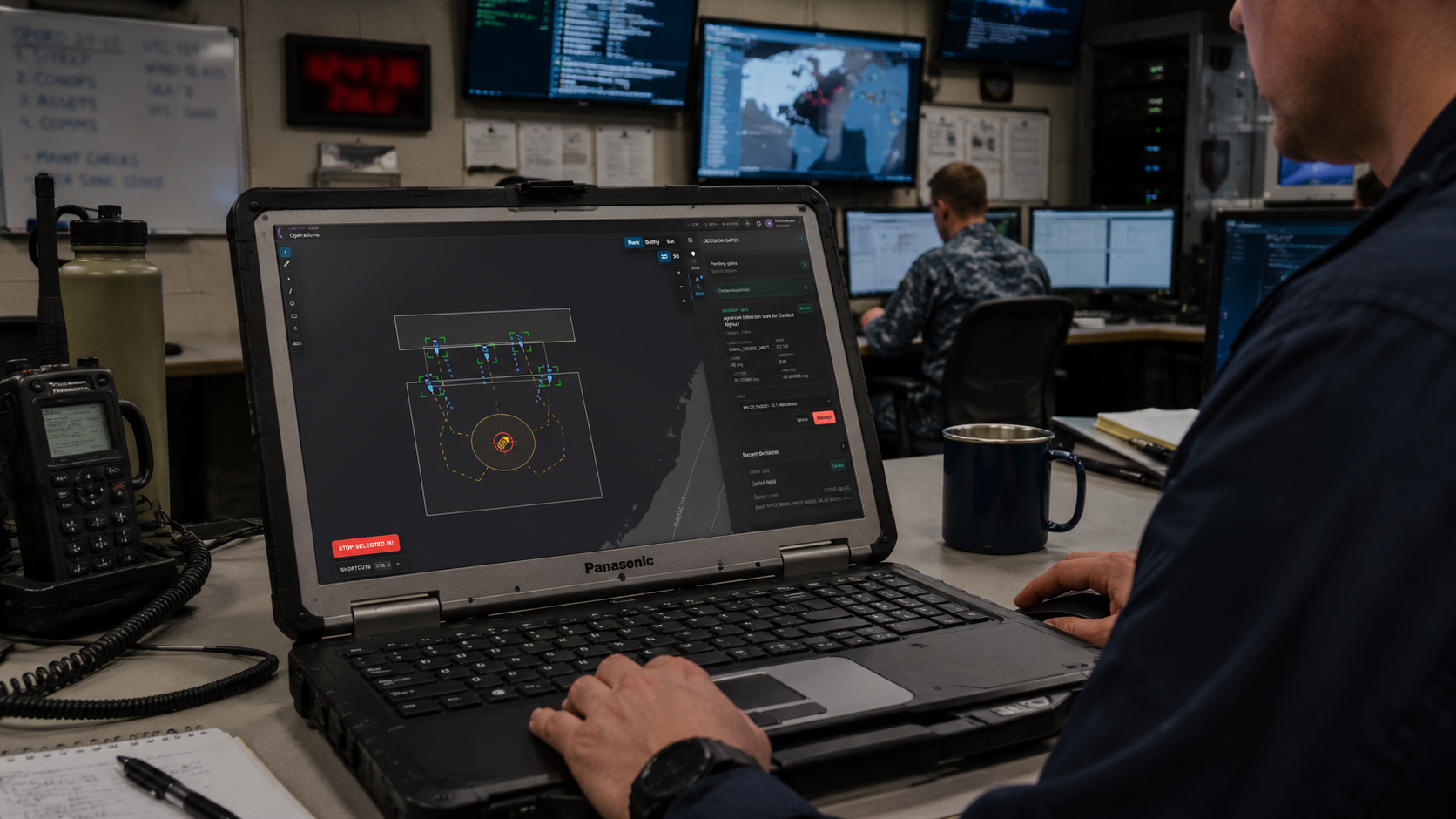
Morocco has completed three pilot installations, with headquarters, a northern regional operations center, and eleven sensor sites scheduled online by mid-2026. Egypt's MDA program is underway under a U.S. Navy FMS contract, with Lyntris now operating alongside Egyptian Navy personnel in Alexandria.